
Work Integrated Learning (WIL) in the Indo-Pacific: A Village Stay Model
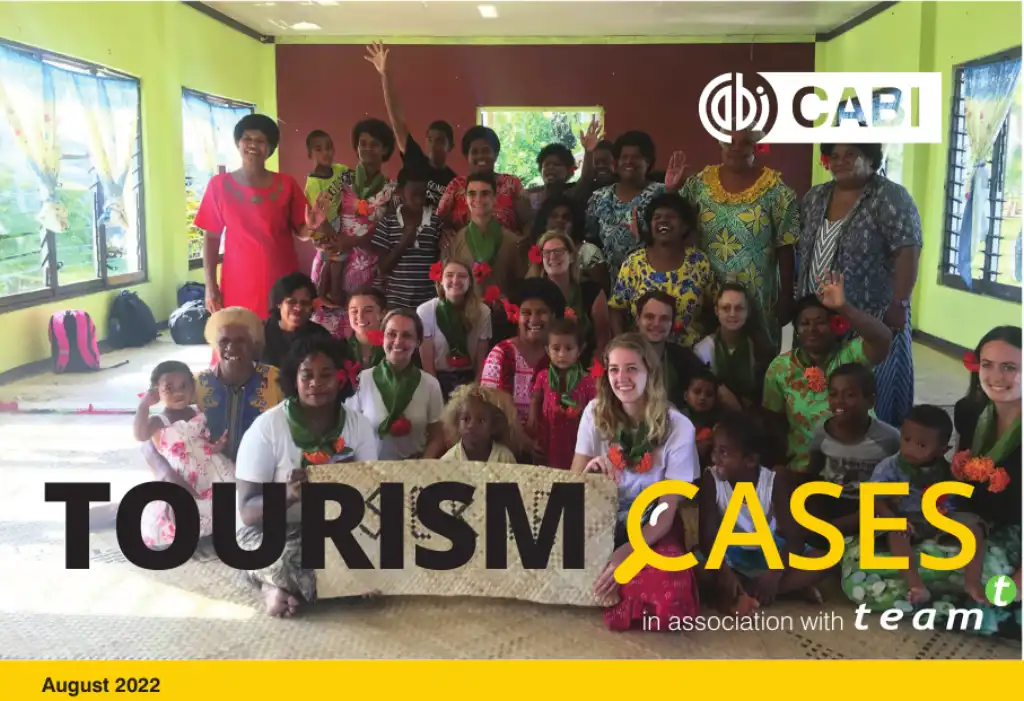
In the Work Integrated Learning (WIL) programmes described here, university students collaborate with eco-resorts and local villagers to create a commercially viable and culturally experiential village stay.
Work Integrated Learning (WIL) in the Indo-Pacific: A Village Stay Model
Summary
This ongoing Work Integrated Learning (WIL) programme began in Fiji in the mid-2010s and was most recently extended to include Indonesia. The project, to establish a commercially viable village stay aligned with a resort, has operated in conjunction with several universities in Australia and the USA and has received external funding. Through outbound mobility programmes, and using an established business toolbox, students work with existing village group structures (i.e. youth, women, elders and church groups) to create a collaborative venture (a cultural immersion and educational stay) between the village and a local eco-resort.
To date, five enterprises including four in Fiji and one in Indonesia have been created. Student evaluations attest to the transformational nature of the WIL programme in providing a unique business acumen and global skill set that can position graduates to live and work in the Indo-Pacific region. The long-term goal is to enable an operational system that can be adapted to include multiple village–resort partnerships, producing a replicable business model (and associated tourism toolkit) that can be applied throughout the developing world.
Background
Our Work Integrated Learning (WIL) programme focuses on developing university students’ capability to conduct business, specifically (though not exclusively) in the Indo-Pacific region, through the creation of a sustainable ecotourism venture (a cultural and education village stay). In partnership with nearby eco-resorts, cohorts of university students have worked with local communities to establish village stays that have resulted in the following commercial websites:
- https://seruaisland.com (Serua village, Viti Levu, Fiji)
- https://fijianhomestays.com (Naiseuseu village, Beqa Island, Fiji)
- http://sosostays.com (Soso village, Yasawa Islands, Fiji)
- http://nacevavillagestay.com (Naceva village, Beqa Island, Fiji)
- https://indonesianhomestays.com (Braja Harjosari village, Lampung, Indonesia)
Several universities have been involved, notably the University of Georgia (USA) and four Australian institutions (with funding provided by the Australian Department of Foreign Affairs and Trade, New Colombo Plan): Central Queensland University (QLD), La Trobe University (VIC), University of Newcastle (NSW) and University of the Sunshine Coast (QLD).
Concept
This WIL is a university-level course that applies the principles of service learning (McCormick et al., 2013), in which cohorts of (typically ten to 12) students develop entrepreneurial skills by establishing a commercially viable village stay. The programme creates opportunities for students to engage in meaningful community development work while providing economic benefits to local communities.
The village stay model serves multiple purposes:
- Student Development: Providing transformational learning experiences that develop business acumen and global skills
- Community Empowerment: Creating economic opportunities, particularly for women who traditionally have limited income-generating options
- Cultural Exchange: Facilitating authentic cultural immersion experiences for tourists seeking alternatives to traditional sun-sea-sand tourism
Programme Plans
The WIL programme requires sub-teams of two or three students to engage with the village and eco-resort on the following comprehensive plans:
1. Community Engagement Plan
Western (i.e. democratic) approaches to engagement and decision making are fundamentally different from that in indigenous communities. Engagement in Fiji, for example, operates within a traditional (patriarchal and communal) system of matagali (clan or landowning unit) and village elders. Establishing norms and expectations of all parties (students, village groups and eco-resort) is key to successful engagement and participation.
In Fiji, the programme is guided by an effective planning strategy known as FLMMA (Fiji Locally Managed Marine Areas). The LMMA process ensures community interests are at the heart of any conservation effort and engages local communities, non-governmental organizations (NGOs), government agencies and researchers.
In Indonesia, engagement is based around musyawarah, a form of consensus-building through informal group discussion, often taking place in contexts of religious, cultural and linguistic diversity.
Key aspects include:
- Bottom-up and socially just approach ensuring active village engagement
- Creation of village stay letters (in native language and English) describing customs and etiquette
- Clear expectations for both villages and guests regarding behavior, clothing, meal protocols, and sleeping arrangements
2. Needs Assessment Plan
Students conduct a comprehensive service-and-demand assessment in the village to understand:
- What services are required, for whom, when, and how they should be delivered
- Village goals and aspirations
- Alignment between student objectives and community needs
Target Markets include:
- Independent travellers (notably flashpackers – higher yielding backpackers) seeking authentic village experiences
- Academic institutions (universities, colleges and high schools) seeking cultural immersion study abroad programmes
3. Tourism and Education Plan
This plan identifies and describes the range of cultural and educational activities for tourists/guests during their homestay:
Documentation Requirements:
- Mapping of cultural and ecological resources (artefacts, plantations, coral reef surveys, fish species, medicinal plants)
- Cultural interpretation of significant events (oral histories, indigenous concepts of time, customs and cultures)
- Identification of activity locations and appropriate community groups for delivery
- Creation of interpretation and educational materials for visitors
Key Learning Outcomes are identified to demonstrate how village stay experiences can fit within academic disciplines and meet specific course objectives.
4. Health and Safety Plan
A comprehensive health, safety and risk assessment covers both village stay operations and educational/tourism activities:
House Assessment:
- Every village house assessed on a 5-point scale using established inventory
- Evaluation of drinking water sources, sleeping arrangements, toilet facilities, cooking facilities, security, and English-speaking residents
- Only homes meeting benchmark standards are included
- Production of house maps and indices
Risk Management:
- Activities not meeting health and safety guidelines are excluded
- Village stay waivers and assumption of risk documents created for all visitors
5. Business and Leadership Plan
Students must understand legal and liability issues and determine appropriate frameworks for resort-village partnerships:
Legal Framework:
- In Fiji, focus on education and cultural immersion (accommodation secondary to education objectives)
- Development of accounting and financial systems for administration and management
- Determination of pricing, charging methods, fund distribution, and reinvestment strategies
Operational Structure:
- Bookings made through eco-resort reservation systems
- Resort collects fees and transfers funds to village
- Village representatives trained in accounting systems and revenue flow
- Resort partnership critical where villages lack bank accounts or business registrations
6. Marketing Plan and Website Development
Students develop comprehensive promotional strategies:
- Collection and preparation of promotional materials (text, video, images)
- Development of marketing materials targeting identified markets
- Creation of fully functioning, stand-alone websites
- Integration of booking systems through partner resorts
Applications and Goals
The programme addresses multiple objectives simultaneously:
For Students:
- Development of entrepreneurial and multidisciplinary skills
- Transformational experience working with diverse community groups
- Enhanced employability in the Indo-Pacific region
- Practical application of business principles in cross-cultural contexts
For Communities:
- Economic independence and public leadership opportunities
- Particular empowerment for women who traditionally have limited income-generating options
- Preservation and sharing of cultural heritage
- Sustainable tourism development
For Tourism Industry:
- Creation of authentic cultural experiences
- Development of sustainable tourism models
- Integration of education and tourism objectives
Conclusions
The success of this WIL programme demonstrates the viability of collaborative approaches to sustainable tourism development. Future expansion depends on several key factors:
Funding Opportunities include:
- NGOs and private philanthropic donors focused on social change in developing nations, particularly women’s empowerment (e.g. Bill and Melinda Gates Foundation, W.K. Kellogg Foundation)
- Governmental economic development initiatives (e.g. Pacific Regional Aid Program, Australia New Zealand Partnership for Development Cooperation)
Success Factors:
- Identification of suitably prepared and engaged communities
- Establishment of key networks in suitable communities through local universities, consular offices, and private philanthropic organizations
- Adaptation of the WIL model to local circumstances and cultural contexts
The programme’s replicable business model and associated tourism toolkit demonstrate potential for application throughout the developing world, providing a framework for sustainable community-based tourism development that benefits all stakeholders.
References
Kuh, G.D. (2008) High Impact Educational Practices: What They Are, Who Has Access to Them, and Why They Matter. American Association of Colleges and Universities, Washington, DC.
Laird, T.F., Shoup, R., Kuh, G.D. and Schwarz, M.J. (2008) The effects of discipline on deep approaches to student learning and college outcomes. Research in Higher Education, 49, 469–494.
McCormick, A.C., Kinzie, J. and Gonyea, R.M. (2013) Student engagement: bridging research and practice to improve the quality of undergraduate education. In: Paulsen, M.B. (ed.) Higher Education: Handbook of Theory and Research. Springer, Dordrecht, The Netherlands, pp. 47–92.
Tarrant, M.A., Schweinsberg, S., Landon, A., Wearing, S., McDonald, M. and Rubin, D. (2022) Exploring student engagement in sustainability education and study abroad. Sustainability, 13, 12658.
Authors: Michael A. Tarrant¹,?,?, Mikell Gleason¹, Helen Sykes², Steven Boyd³, Kevin Lyons? and Nick Herriman?
Affiliations:
- Warnell School of Forestry and Natural Resources, University of Georgia, Athens, GA, USA
- Marine Ecology Consulting, Suva, Fiji
- School of Business and Law, CQUniversity, QLD, Australia
- Business School, University of Newcastle, NSW, Australia
- Department of Social Inquiry, La Trobe University, VIC, Australia
© CAB International 2022
https://www.cabidigitallibrary.org/doi/abs/10.1079/tourism.2022.0030
You must be logged in to post a comment.