
True jellyfish have an open bell or hood – the main body shaped like an umbrella, with lots of tentacles or arms coming out of the bottom, where the handle of the umbrella would be.
While all jellyfish can sting, most are not powerful enough to hurt a human for more than 15 – 20 minutes.
The stings are only in the tentacles, not the bell (or body), which are quite short, so some larger jellyfish can safely be pushed out of the way as long as you only touch the bell.
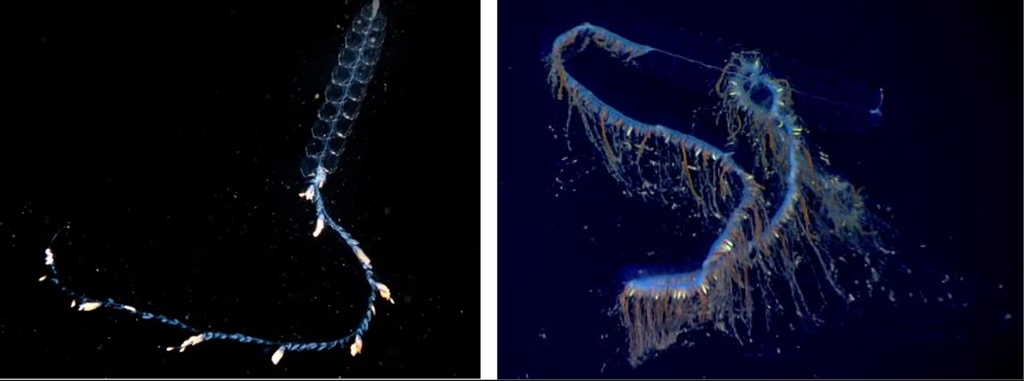
Comb jellies and salps are shaped more like a closed bag or balloon, with no tentacles or sometimes with only two, they DO NOT HAVE STINGS and are totally harmless.
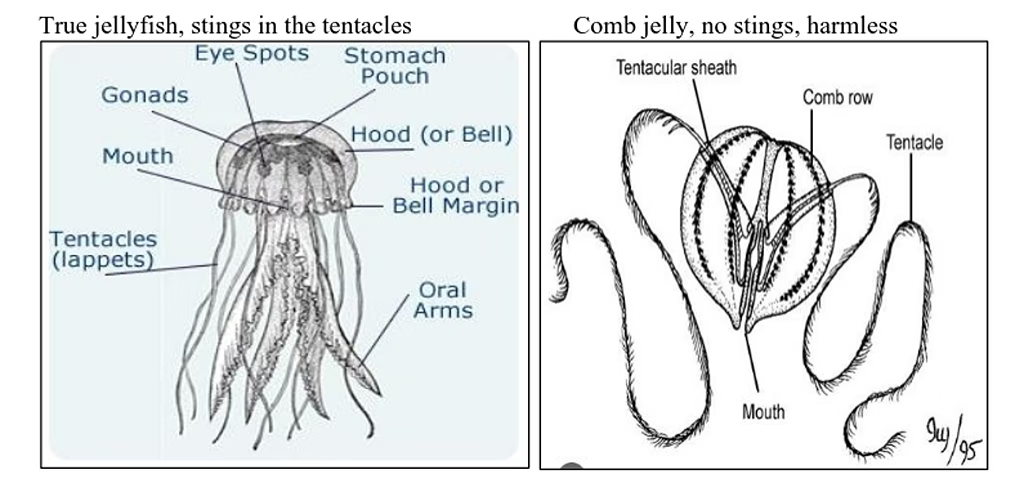
Most Common Marine Stingers in Fiji
We do not have many venomous (very harmful) jellyfish species in Fiji. Less harmful stings that do not last long can be caused by the things below:
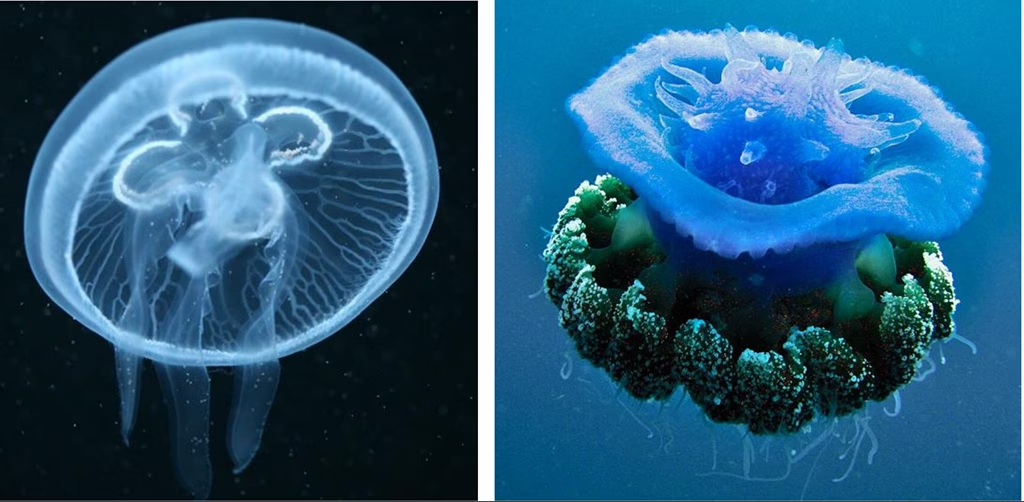
Moon jellies and Purple Crown jellies
Moon jellies and Purple Crown jellies can sting, but not badly, and especially the Crown jellies do not usually float in until they are half dead, and butterflyfish have eaten most of their stinging tentacles, so they are not a concern.
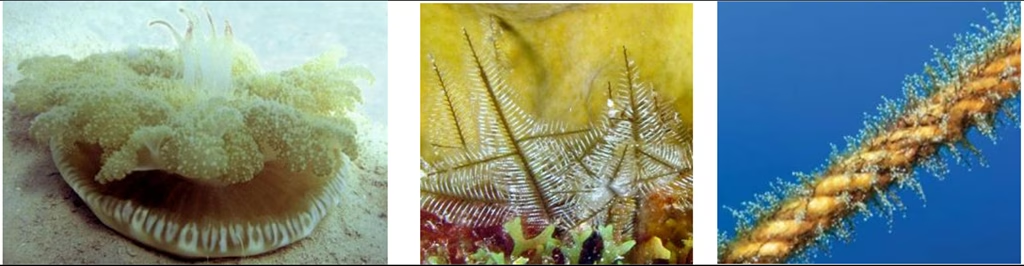
Upside-down jellyfish
Upside-down jellyfish are found in mangrove swamps and sometimes in muddy pools. They don’t usually swim around, and their stings are on the top when the jellyfish is upside down on the seabed, so stings only tend to happen if people handle them, or sit on them.
Stinging hydroids
Stinging hydroids, cousins to fire coral, look like white feathers and grow on mooring lines or sometimes on the reef, and can sting the hands of people taking hold of them.
Floating larval (baby) jellyfish or hydroids
At warm times of the year we sometimes get seasonal outbreaks of invisible floating larval (baby) jellyfish or hydroids, which ping and sting for about 20 minutes, then are gone.
First Aid
First aid is to scrape off any stinging cells with a handful of sand, and apply white vinegar to prevent further stings BEFORE any fresh water shower. (Freshwater can make it sting again).
| Signs & symptoms | Diagnosis | Immediate First Aid | Follow Up |
| Red blotches on skin (no bleeding) Pain or Itching Possible but not always: Blisters Swelling around sting | Mild sting: Fire Coral Jellyfish Hydroids | VINEGAR wash (before fresh water) If no vinegar: Lemon juice or Crushed pawpaw (papaya) leaves | Any cream for mosquito bites (Cortisone / Antihistamine) Slice of lemon rubbed over sting stops itching Rash lasts 2 – 3 days |
There are more serious venomous jellyfish in the sea, that can cause a great deal of pain, and in a very small number of cases, even death.
We are lucky that none of these live in Fiji waters, but sometimes after a big storm or cyclones, a few “visitors” can get washed in to us.
Occasional Visitors…
Very occasionally we have had one or two Blue-bottles or juvenile Portuguese Man o’War, and Box jellies even more rarely. I know of only three incidents in 30 years.
Blue-bottles
Blue-bottles are not true jellyfish, but part of a family called Siphonophores. They have long chains of stinging cells which they use to catch and kill fish. Some are transparent and hard to see. The blue-bottle has a blue “sail”, usually 10 – 20 cm long, which can be seen floating on the surface of the water like a small blue plastic bag. The tentacles can be very long – large ones can stretch back from the float up to 10 metres away.
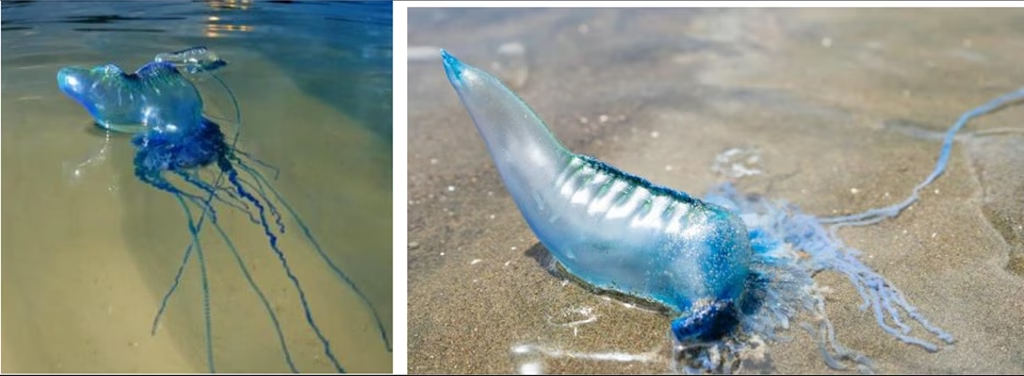
Box jellyfish
Box jellyfish are usually small (5 – 10 cm long body), clear and a different shape from true jellyfish – they are box shaped with tentacles only on the four corners. Again these tentacles can be very long, so the body might not be seen when the sting is felt.
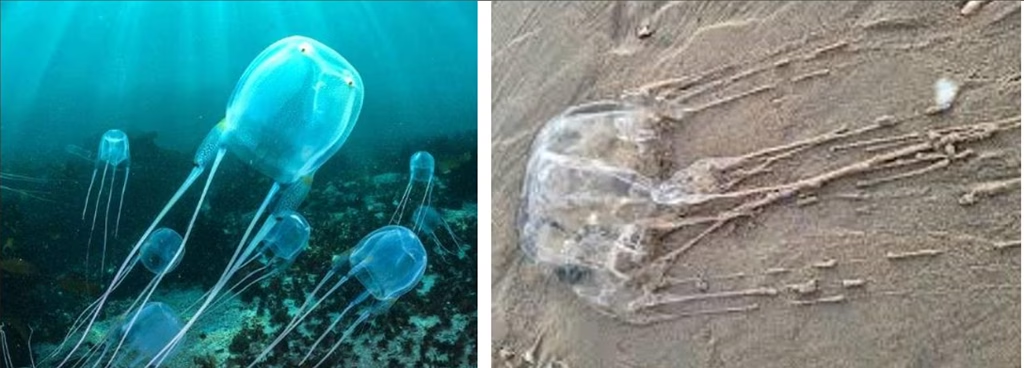
DO NOT go into fresh water until after vinegar treatments, as stuck cells can sting again. Be ready in case people go into shock or have an allergic reaction.
| Signs & symptoms | Diagnosis | Immediate First Aid | Follow Up |
| Long strings of red blotches on skin (no bleeding) Visible clear tentacles stuck or wrapped around skin Blisters Swelling around sting Strong pain | Dangerous sting: Box jellyfish Blue-bottle Siphonophore | Scrape off tentacles without touching them VINEGAR wash for at least 30 seconds If no vinegar: Rinse with SEA water (NOT FRESH) or a paste of seawater and baking soda. If pain continues very strongly Cover area in HOT WATER (45 – 50oC) for 30 mins or longer – can be applied over a towel | Pain killers Anti-histamine tablets Ice pack (wrapped up – do not put ice straight on to skin) Hydrocortisone / Antihistamine cream If severe reaction such as difficulty breathing, nausea, vomiting, may require a doctor or hospital treatment, |
| Weak and shaky Wants to leave May collapse | Shock: May happen after any accident | Lie down in quiet, shaded area. Keep calm & drink water | Do not let patient leave until they can walk properly |
More information
DAN (Divers Alert Network) Marine Envenomations: Jellyfish and Hydroid Stings
https://dan.org/alert-diver/article/marine-envenomations-jellyfish-hydroid-stings/
Marine Stingers: Identification
NO STINGS – Harmless
Comb jellies / Sea Gooseberries / Salp chains
Comb jellies are small, clear jelly-like closed bags or balloons. They may have two long tentacles. They swim by beating hairs inside their body that may look coloured lights. NO STINGS.
Salp chains look like a long chain of comb jellies, and swim a bit like an eel.
They will break up into short sections if touched. NO STINGS, NO BITES.
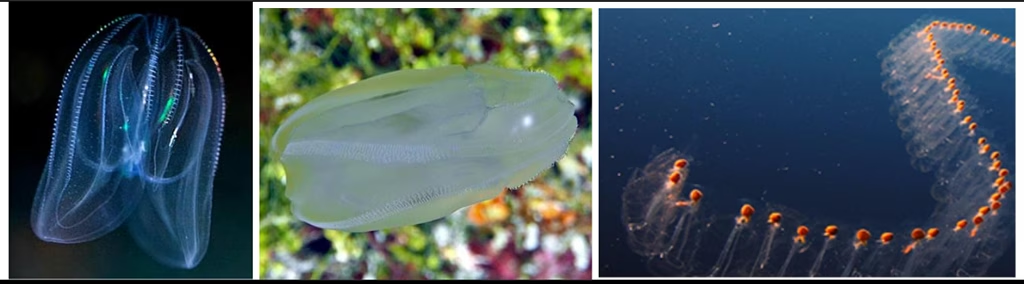
MINOR STINGS – short lasting
Invisible baby jellyfish or hydroids
Nothing seen, just sharp stings a bit like electric shocks that wear off after 15 -20 minutes.
Upside-down jellyfish and Hydroids
Upside-down jellyfish sit on the sea bed, tentacles, upwards, looking like seaweed in muddy water. Hydroids look like white feathers and may grow on reef or ropes.
Moon Jellies and Purple Crown jellies
Moon jellies are usually less than 20 cm across the bell, and clear, with four joined circle markings on the bell, and short, clear tentacles.
Purple Crown jellies are big (20 – 30 cm across the bell) and solid-looking, with a high crown on the bright purple bell, and short frilly arms with clear tentacles below.
Butterflyfish will eat the stinging tentacles, so often they cannot sting by the time they are on the reef. If there are only a few, they can be pushed away by pushing on the bell.
DANGEROUS STINGS
Blue-bottles (Portuguese Man o’War)
Blue “bag” sail floats on the surface of the water. Very long blue tentacles may stretch out up to 10 metres away from the sail. If even one is seen, leave the water, as you do not know where the stinging tentacles are.
Siphonophores
Related to blue-bottles but without the floating sail. Long, clear chains with stinging cells on threads hanging down. Can stick to skin like blue-bottles, and are painful, but not nearly as dangerous.
Box jellyfish
Small, clear box-shaped bell, long clear tentacles only coming off the four corners. If even one is seen, leave the water, as you do not know where the stinging tentacles are. Sometimes found washed up on the shore or beach.
NOTE: if jellies are found washed up on the shore or beach THEY CAN STILL STING – do not handle.
BASIC FIRST AID FOR MARINE LIFE STINGS
| Signs and symptoms | Diagnosis | Immediate First Aid | Follow Up Treatment |
| Weak and shaky Wants to leave May collapse | Shock: May happen after any accident | Lie down in quiet, shaded area. Keep calm & drink water | Do not let patient leave until they can walk properly |
| Red blotches on skin (no bleeding) Pain or Itching Possible but not always: Blisters Swelling around sting | Mild sting: Fire Coral Jellyfish Hydroids | VINEGAR wash (before fresh water) If no vinegar: Lemon juice, Crushed pawpaw (papaya) leaves | Any cream for mosquito bites (Cortisone / Antihistamine) Slice of lemon rubbed over sting stops itching Rash lasts 2 – 3 days |
| Long strings of red blotches on skin (no bleeding) Visible clear tentacles stuck or wrapped around skin Blisters Swelling around sting Strong pain | Dangerous sting: Box jellyfish Blue-bottle Siphonophore | Scrape off tentacles without touching them VINEGAR wash for at least 30 seconds If no vinegar: Rinse with SEA water (NOT FRESH) or a paste of seawater & baking soda. If pain continues very strong Cover area in HOT WATER (45 – 50oC) for 30 mins or longer can be applied over a towel | Pain killers Anti-histamine tablets Ice pack (wrapped up – do not put ice onto skin) Hydrocortisone / Antihistamine cream If severe reaction such as difficulty breathing, nausea, vomiting ,may require a doctor or hospital treatment, |
| Cut or Puncture Wound Severe Pain Possible but not always: Some Bleeding Nausea or Vomiting Shock May Collapse | Severe Sting: Stingray Scorpionfish Stonefish Lionfish Crown of Thorns | Remove sting if possible Encourage bleeding Cover whole wound in HOT WATER (45 – 50oC) for 30 mins or longer – breaks down poison and stops pain | Clean and disinfect Use antibiotic cream or powder Keep covered and dry Swelling or bruising may last 2- 3 days If pain lasts, see doctor |
| Very small Puncture (no bleeding) Weakness & Numbness Possible but not always: Muscles stiff or paralysed BREATHING AND HEARTBEAT STOPS | Life threatening poison: Sea Snake Cone Shell | IMMEDIATE EVACUATION MAY NEED CPR Keep affected limb lower than body If qualified, apply pressure bandage to stop poison spreading | GET TO A DOCTOR OR HOSPITAL AS SOON AS POSSIBLE THIS IS POTENTIALLY LIFE THREATENING |
More Information
The DAN (Divers Alert Network) Hazardous Marine Life Medical Reference Book is highly regarded as a practical, comprehensive guide for identifying and treating injuries from marine life.
You must be logged in to post a comment.