
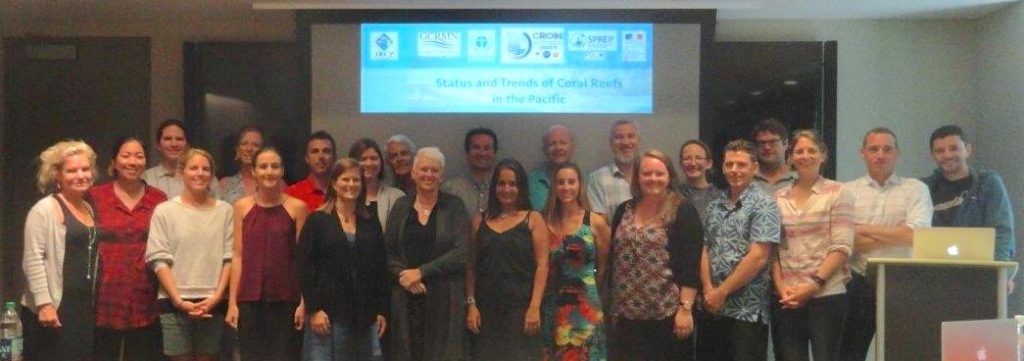
GCRMN Workshop Hawaii 2016
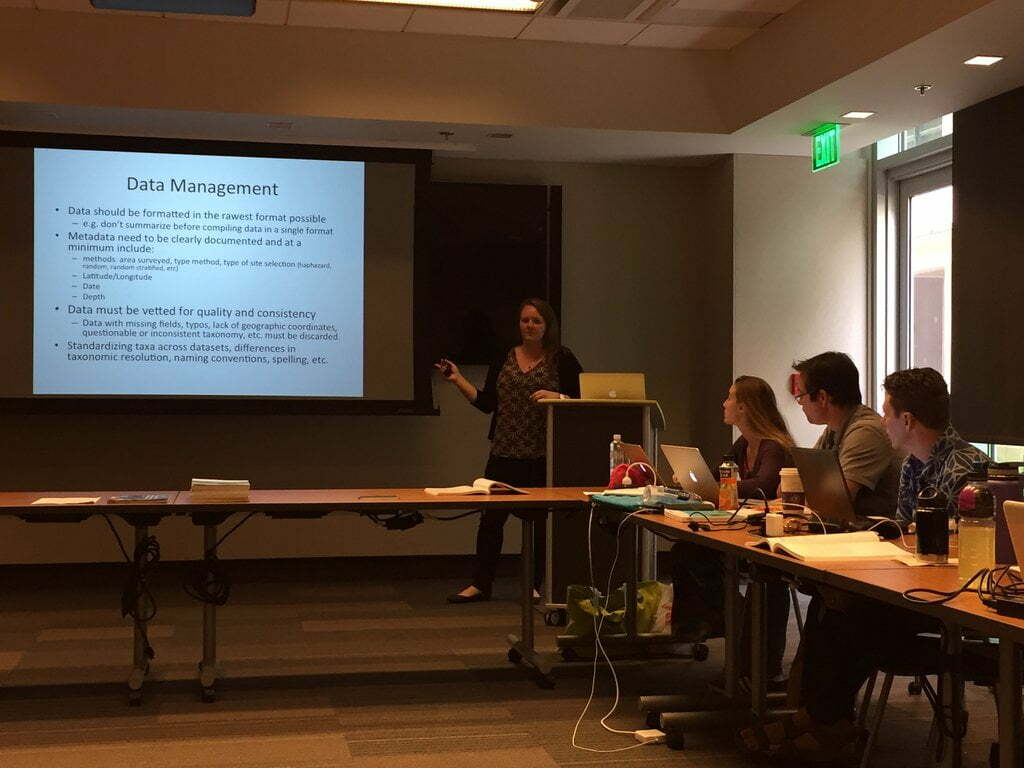
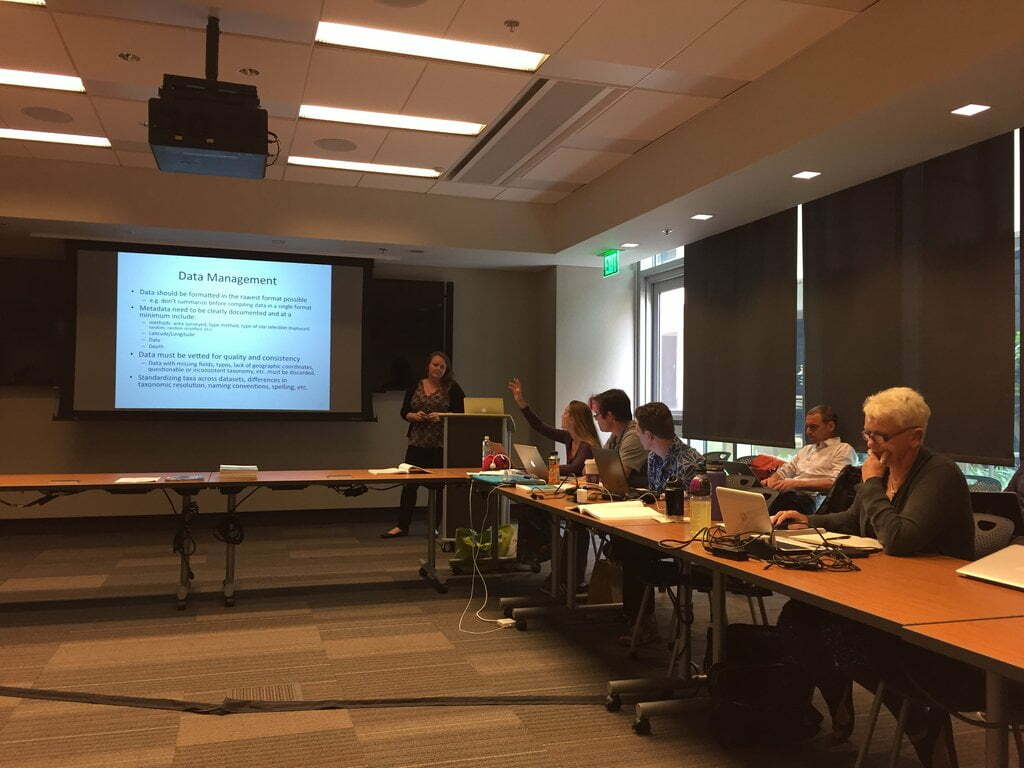
Helen Sykes attended the Global Coral Reef Monitoring Network (GCRMN) Workshop in Honolulu Hawaii USA on 11th-14th October 2016 as the Fiji Coordinator for the South Pacific Node of GCRMN established in 2006.

GCRMN Workshop Hawaii 2016
The workshop was attended by:
- Maya Srinivasan, Marine Biology and Aquaculture, College of Science and Engineering, Australia
- C-M Moritz
- Douglas Fenner
- Charles Birkeland
- Ivor Williams
- Adel Heenan – NOAA Affiliate
- Bernardo Vargas-Angel – NOAA Affiliate
- James Guest
- Mary Donovan
- Alice Lawrence
- Lyza Johnston
- Sheila McKenna
- Jennifer Smith
- Stuart Sandin
- Serge Planes
- Aurélie THOMASSIN – DGALN/DEB/LM1
- Marine Gouezo
- Emma Kabua-Tibon
- Helen Sykes (Marine Ecology Consulting)
- Hilary Ayrton
- Jerker Tamelander
- Paul Anderson SPREP
- Antoine GILBERT
- Ruth Gates
- Jessica DeBlieck
Global Coral Reef Monitoring Network (GCRMN)
GCRMN is a global network aiming to strengthen the provision of best available scientific information on and communication of the status and trends of coral reef ecosystems, for their conservation and management.
The main substantive activity of GCRMN, providing a foundation for its other activities and outputs, is the preparation of regional periodic assessments drawing on monitoring, research and other data and establishment of regional GCRMN committees, where possible drawing on existing nodes and linked to existing Regional Seas mechanisms. The approach piloted in the Caribbean 2012-2014 provides the blueprint for this.
The regional assessment report provides a scientific foundation for identification of recommended minimum standards for monitoring indicators and methods as well as actionable recommendations for coral reef policy and management. The regional reports and committees provide a basis for development of more synthetic global reports (see below).
The process of developing the regional report also supports the establishment of regional networks of sites and institutions that commit to applying minimum standards in ongoing monitoring.
Where possible development of regional reports may utilize opportunities provided by ongoing and planned regional initiatives and projects. This would also enable ??GCRMN to pursue two or more regional processes concurrently.
GCRMN Workshop Hawaii 2016 Read More »


You must be logged in to post a comment.